Your business, worth more.

More people find you. More of them buy. Each one is worth more.

GoogleGoogle · 12 reviews

TrustpilotTrustpilot · 2 reviews

One conversation. One clear next step.Let's talk
  • VESA Services
  • Energiekonzepte Deutschland
  • Carolwood Estates
  • Nayara Resorts
  • Kalena Studios
  • Volta
  • Hacienda La Minita
  • Sinn+Wandel
  • Certus Solutions
  • The Agency Costa Rica
  • Cecap AG
  • Certus Group
  • CASA
  • Bolz
  • Vertrieb.Plus
  • Sarco Architects
  • Marlue Facility

What you get

About us

Market value is the number the market puts on what you've built. Market Value Advisory is the firm you bring in to raise it. We work out where your business is losing customers and money, decide what to fix first, then build the fix ourselves, with the right people and the right tools, AI among them. We advise and we build, because the pieces feed each other: a better offer makes every ad work harder, and faster follow-up saves the leads you already paid for.

What changes for you

How we think

Most businesses buy
the fix before anyone
has named the problem.

Every line is a customer.

First click

  1. Can I trust them?
  2. Is it worth the money?
  3. Will it work for me?
  4. Will it be a hassle?

Nobody tells you why they left. They're just gone.

Paid invoice

The elevator effect

People complain the elevator is slow. The logical fix is a faster one. The smart fix is a mirror, because nobody notices the wait while they're looking at themselves. We look for the mirror in your business.

Stop the leak. Raise the value. Then add fuel.

Read: Diagnosis Before Solution

The cost

Your business is losing money somewhere right now. Let's find out where.

Let's talk
  • CR Home Management
  • Sportpferde Wassenberg
  • Velantir
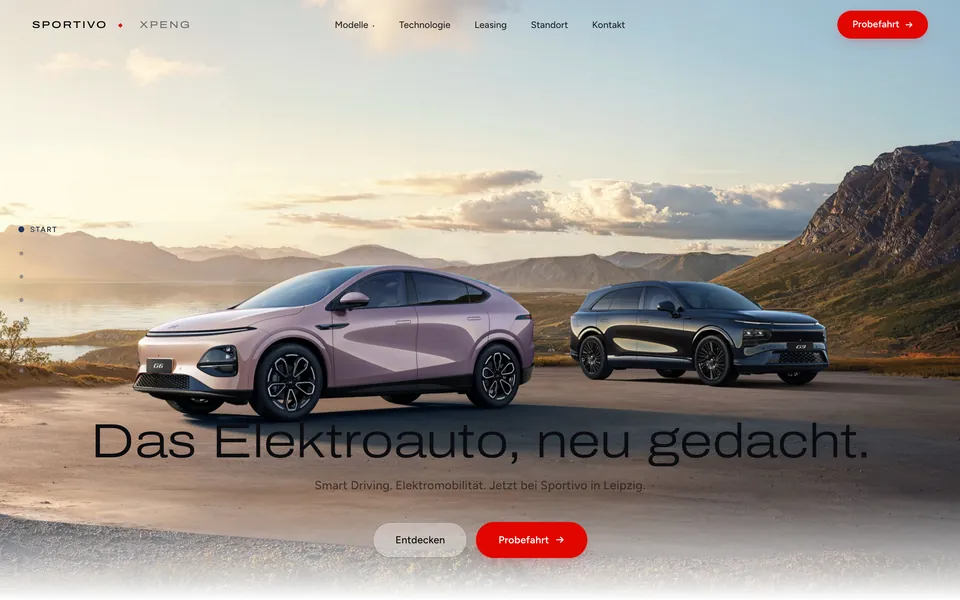
  • Sportivo XPeng
  • BAZA Import
  • Natural Rejuvenation
  • VESA Services

Our work

Words, design and build.
All from us. Award level.

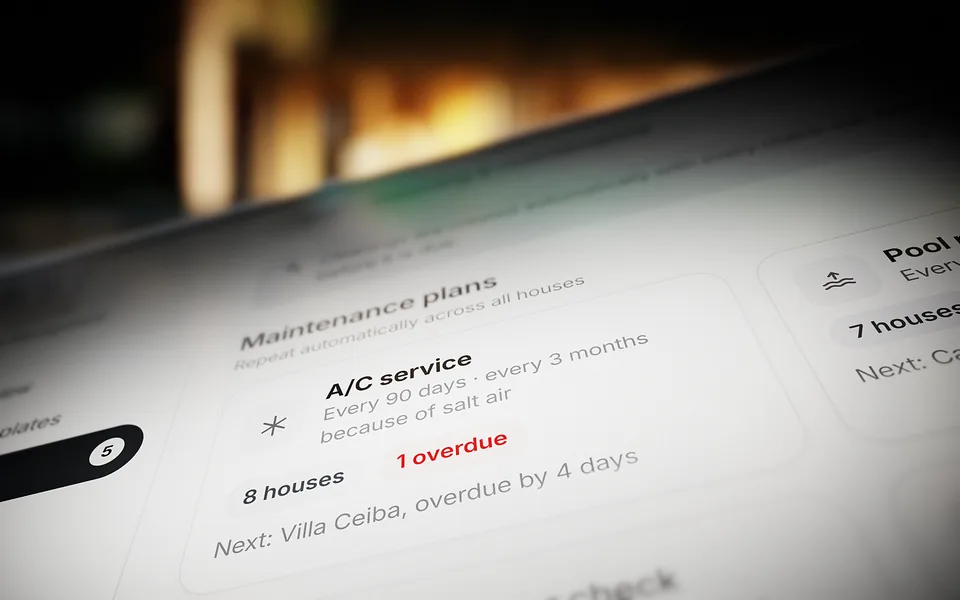
  • Angled close-up of the IMMO Costa Rica app: the A/C service plan across eight houses with one overdue, the rest of the screen falling into shadow, sample data.
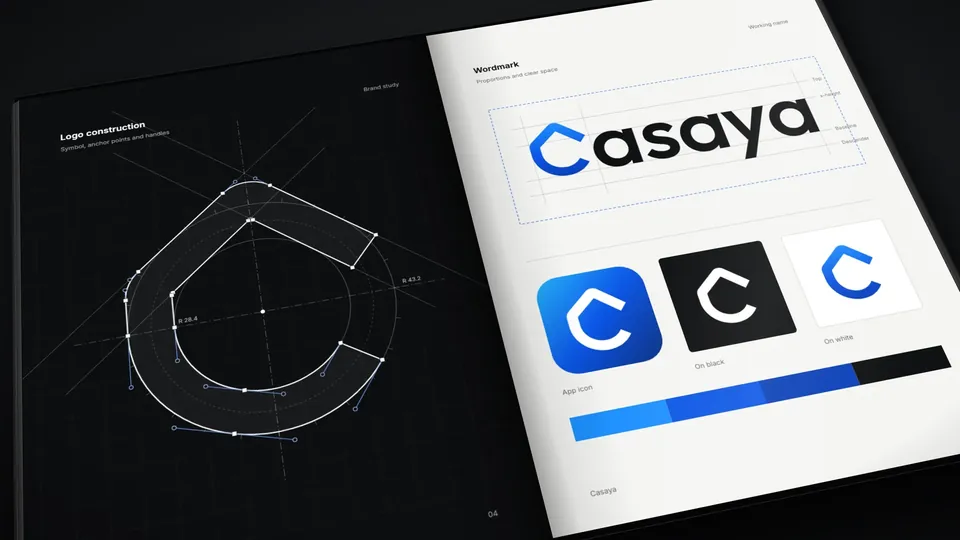
  • Casaya, working name: brand book spread with the logo's vector and construction lines
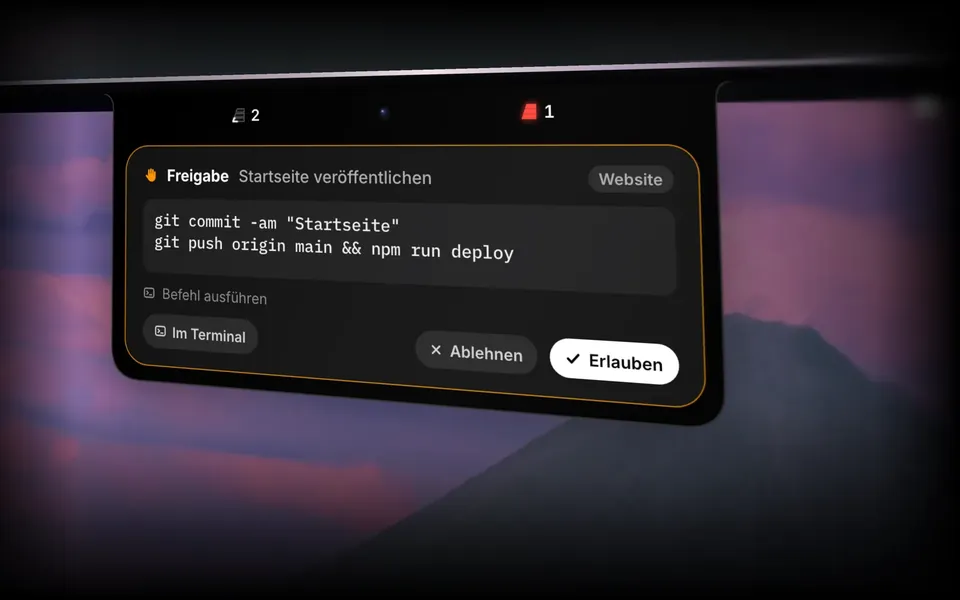
  • Close-up of the Arenal notch on a MacBook, open with an approval card asking to allow or reject a command.
  • Modern white villa with timber cladding between palm trees under a deep blue sky
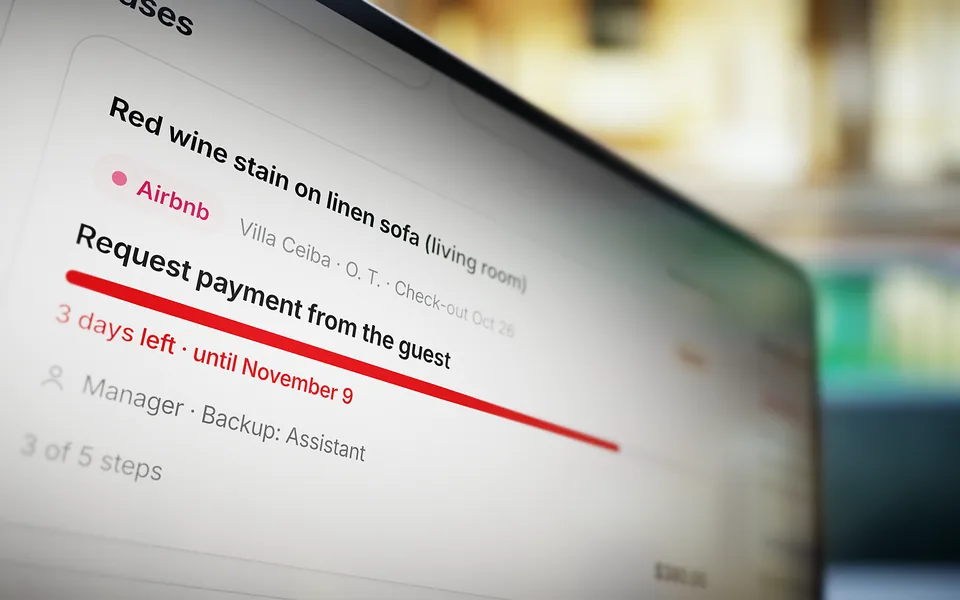
  • Angled close-up of the IMMO Costa Rica app: a damage case with a nearly used-up deadline bar and three days left to claim from the guest, sample data.
  • VESA brand book spread: the idea behind the mark
  • Angled close-up of the Arenal start window with sidebar, session counts and a list of finished work.
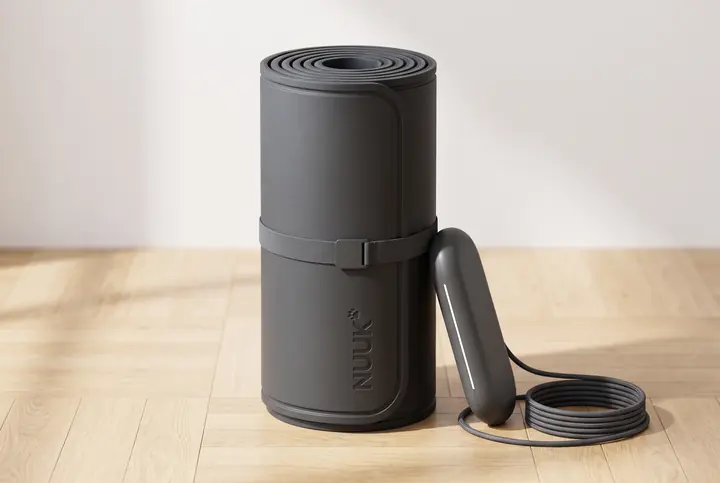
  • NUUK cooling mat for dogs, rolled up on a wooden floor, product image
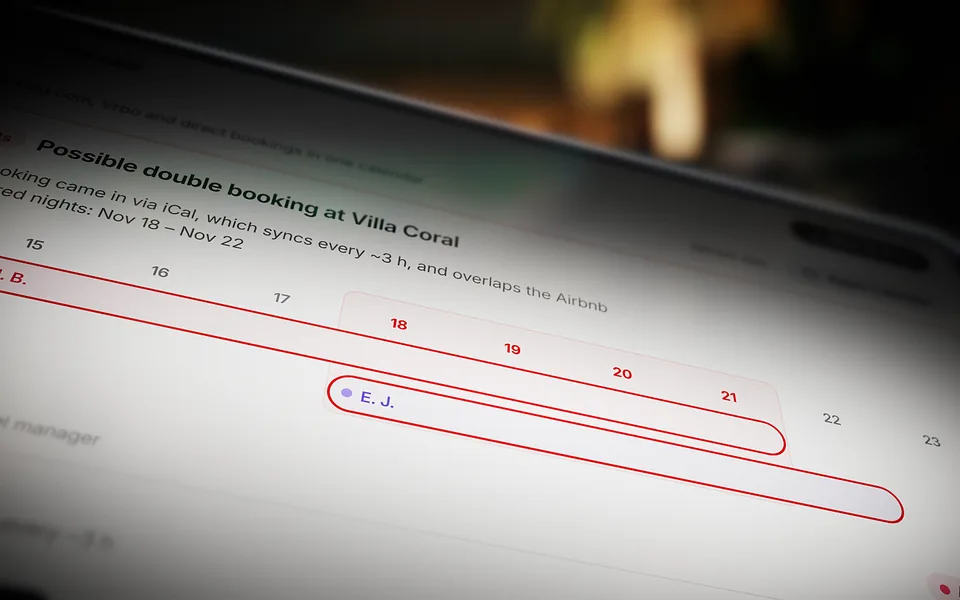
  • Angled close-up of the IMMO Costa Rica app: two overlapping bookings on a timeline, the shared nights marked as a possible double booking, sample data.
  • Three VESA badges stacked on black plates: Trusted by Co-Living Operators, Hotel Operators and Property Managers.

Free playbook

How to find where your business leaks money, without hiring anyone.

Run 3 checks yourself and know what to fix first. Enter your mobile number and we'll send you the free playbook on WhatsApp.

By tapping the button, you agree that Market Value Advisory may send this playbook to your number on WhatsApp.

Email us your number

Who you work with

What we say, we do.

You'll always know where things stand.

We do our work conscientiously. In a market full of broken promises, that's no longer a given.

You speak directly with me.

Best regards,

Signature of Dennis L. Bernhard

Dennis L. Bernhard

Dennis L. Bernhard, founder of Market Value Advisory
Dennis L. BernhardFounder · Market Value AdvisoryGermany
Open seatPartner, England
Susan Hernandez, partner at Market Value Advisory, who also runs Velantir
Susan HernandezPartner · also runs VelantirCosta Rica
Open seatPartner, Brazil
  • Costa Rica
  • England
  • Leipzig
  • Nayara Resorts
  • Hacienda La Minita
  • The Agency Costa Rica
  • Sarco Architects
    • VESA Services
    • Energiekonzepte Deutschland
    • Marlue Facility

    Market Value Advisory

    Strategy & Offers

    In 14 days you know what to fix first, and what to stop paying for.

    When everything looks urgent, money goes everywhere and nothing moves. We go through your numbers and what you sell until the one problem shows, the one that caps everything else. Then you know which offer to lead with, how to price it and where the next dollar goes.

    How it works

    1. Open the books.

      You give us access to your numbers and show us what you sell today.

    2. Test every guess.

      We check each possible cause against your data until one real problem is left.

    3. Sit down with the plan.

      We walk you and your people through it live, and you leave knowing who does what, in what order.

    How we think about it

    Strategy sounds like deciding what to do. Mostly it's deciding what you'll leave undone, and that's why it hurts. If nobody in the room dislikes the plan, we assume nothing has been decided yet.

    What you own

    • A written diagnosis your whole team can read
    • Your offer and pricing, written out
    • A 90-day plan with priorities and owners
    • A list of quick wins you can act on in under two weeks

    Websites & Apps

    A site that sells for you before the first call.

    Most sites talk about the company and leave the buyer to work out the rest. We write, design and build your site or app around the questions people ask before they buy, with proof they can check and one clear next step on every screen. Your team can change the words itself, without calling a developer for every line.

    How it works

    1. Decide what it has to do.

      We settle who it is for and what they should do next, before anything gets pretty.

    2. Write, design, build.

      Words, design and code all come from us, built for the phone first, so you review the work instead of managing it.

    3. Launch and hand over.

      We set it up for Google and AI search, then train your team: a website takes about eight weeks, an app about fourteen.

    How we think about it

    Nobody visits a website to admire it. They arrive in the middle of a decision, a little tired and a little suspicious, with no way to test your work yet. So we treat the site as the only sample they'll get, and every detail as evidence.

    What you own

    • A finished website or app, live and in your hands
    • All the words, written for your buyers
    • Forms that send every inquiry straight to you
    • Setup for Google and AI search, plus tracking that shows what brings inquiries
    • The code, the documentation and the training, so you never depend on us

    Search Visibility

    Be the name buyers hear when they ask Google or AI who to call.

    Your buyers ask Google and AI tools who to call, and if your site doesn't answer clearly, they hear someone else's name. We find out what they ask, write pages that answer it and fix what stops search engines and AI from reading your site. Nobody can promise you the top spot, but you reach people who are already looking, without paying for every click.

    How it works

    1. Find the questions.

      We research what your buyers type into Google and ask AI tools, and who comes up today.

    2. Answer them.

      We write pages that answer those questions plainly, so people and AI can both use them.

    3. Clear the way.

      We fix the technical problems that get in the way and clean up your business profile and listings.

    How we think about it

    Search gets treated as a trick to play on a machine. But the machine is only trying to give someone an answer it won't regret. So we ask something older than SEO: if a stranger read only your site, could they recommend you to a friend and say why?

    What you own

    • A list of what your buyers search and ask
    • Pages written to answer those questions, on your site
    • A site search engines and AI can read
    • A clean business profile and listings

    Brand & Campaigns

    Stop being compared on price, and get in front of the buyers you want.

    If you look and sound like the next option, buyers choose on price. We work out why a customer should pick you, turn it into a look and message you can use everywhere, then put it in front of the right people through ads, email and content. Every channel says the same thing about you, and your price has a reason behind it.

    How it works

    1. Find the reason.

      We look at your market and competitors and talk to your customers to see what really sets you apart.

    2. Make it visible.

      From that one decision we build the logo, colors, images and message in about eight weeks, so nothing comes down to taste.

    3. Put it out.

      We run ads on Meta, Google and TikTok plus email, cut what doesn't work and move the budget to what does.

    How we think about it

    Companies get tired of their own message long before anyone else has noticed it. So they change it, and every buyer keeps meeting a new company. We pick one thing worth saying, then keep saying it long after it bores you.

    What you own

    • A clear statement of why buyers should pick you
    • A logo, colors and type, with guidelines and templates
    • Names and taglines, where you need them
    • A library of images, video and copy, including the versions that won
    • Tracking that shows which campaigns pay off

    AI & Automation

    Every inquiry gets answered, booked and followed up, and your team gets time back.

    You paid to get that inquiry, then it goes cold because everyone is busy. We build software around how you already work and connect it to your phone, website and calendar. It answers, asks what you would ask, books the appointment, sends reminders and keeps after people who went quiet.

    How it works

    1. Map how you work.

      We sit down with the people doing the work and map where inquiries come in and where the time goes.

    2. Start with the worst spot.

      You get a working version on the first problem, and your team's feedback shapes it week by week.

    3. Roll it out.

      We train your team, put it live and keep an eye on what it does and what it costs.

    How we think about it

    Most AI projects start with a tool and go looking for a job to give it. We look for the dull work your best people have stopped noticing. Then we ask what they'd do with those hours, because saved time nobody planned for just disappears.

    What you own

    • Automatic replies to forms, messages and missed calls
    • Booking and reminders in your calendar
    • Follow-up for leads that went quiet
    • The code and your data, documented and yours, not rented
    • Monitoring and cost controls, plus three months of maintenance

    Sales Systems

    Stop losing deals because someone forgot to call back.

    Your leads sit in inboxes, phones and somebody's head, so nobody can say who is waiting or why a deal went quiet. We bring them into one dashboard and give whoever sells for you call scripts and follow-up steps written for your offer. You open it and see which deal needs you today and where the others stall, instead of guessing.

    How it works

    1. Walk the sale.

      We follow a lead from first inquiry to paid invoice and mark where deals stall.

    2. Put it in one place.

      Every lead lands in one dashboard, so you can see who asked, who got an answer and who is waiting.

    3. Write the words.

      We write the scripts and follow-up for each stage, so whoever sells for you knows what to say next.

    How we think about it

    When sales slip, the instinct is to look for a better salesperson. Great sellers are rare, they leave, and what they know leaves with them. So we'd rather ask what it takes for an ordinary person on an ordinary Tuesday to sell well.

    What you own

    • One dashboard for every lead and deal
    • Call scripts written for your offer
    • Follow-up steps for each stage of the sale
    • A clear view of where deals stall

    Education

    Diagnosis Before Solution:
    Why the Order Matters

    Dennis L. Bernhard · June 12, 2026

    Most stuck companies buy a named solution before anyone has named the problem: more marketing, a sales hire, a rebrand, a new tool. Each one is a treatment for a symptom, and treating the wrong symptom does not just waste money, it scales the wrong thing and hardens the real constraint. No competent doctor prescribes before they diagnose. The same order applies to a business. A reductive diagnosis, run from the outside in 14 days, names the one constraint first and only then points at the lever. Skipping diagnosis feels like saving time. It is the most expensive shortcut you can take.

    A founder calls and already has the answer. "We need more leads." Or "we need a better salesperson." Or "the brand looks dated, we should rebrand." Notice what has happened. They have skipped straight to the solution and never said out loud what the actual problem is. The order is backwards, and the backwards order is what keeps them stuck.

    This is the single most expensive mistake in a seven-figure business, and it hides because it feels productive. Buying a solution feels like progress. You hire someone, you launch a campaign, you sign with an agency, and for a few weeks it looks like motion. But if the solution was aimed at the wrong constraint, you have not moved. You have spent money and time to make the real problem harder to see, because now it is buried under a new initiative that has to be defended.

    You would never let a surgeon skip the scan

    Think about how medicine actually works. You walk into a doctor with chest pain. A competent doctor does not say "chest pain, let me schedule the bypass for Tuesday." They take history, run a test, look at the scan, and only then decide whether you need a stent, a change in diet, or reassurance that it is muscular. The prescription comes after the diagnosis. Always. A doctor who cut first and diagnosed later would lose their license, and rightly so.

    Now watch how the same person runs their business. Revenue is flat, so they prescribe "more marketing" without a single test of whether marketing is the constraint. That is cutting before the scan. The reason it passes unnoticed in business and not in medicine is that the consequences are slower and quieter. Nobody dies. You just lose a year, hire the wrong person, and conclude that the market is hard.

    The analogy is not decoration. It is the whole point. A symptom and its cause are different things, and the gap between them is where all the money leaks. Chest pain is the symptom. The blocked artery is the cause. Flat revenue is the symptom. The cause might be that sales depends entirely on the founder, or that delivery cannot scale without quality dropping, or that the offer is aimed at a buyer who cannot afford it. More marketing fixes none of those, but it is the prescription everyone reaches for, because it is the most familiar bottle on the shelf. We unpack that specific failure in why more marketing won't help.

    Why the wrong solution is worse than no solution

    Here is the part founders underestimate. Treating the wrong symptom is not neutral. It is actively negative, for three reasons.

    First, it consumes the budget that the real fix needed. You spend 80,000 euros on paid acquisition when the constraint was a sales process nobody had written down. The leads arrive, the founder still has to close every one personally, the pipeline jams harder than before, and the money is gone.

    Second, it produces a false signal. When the campaign does not work, the conclusion is rarely "I diagnosed wrong." It is "marketing does not work for us" or "this market is saturated." A wrong solution generates a wrong lesson, and that wrong lesson narrows the next decision too. You eliminate the right answer because the wrong version of it failed.

    Third, it scales the defect. If your underlying model has a crack in it, growth does not paper over the crack, it widens it. Pour volume into a delivery system that only holds together because the founder personally rescues every project, and you do not get a bigger business, you get more unhappy clients and a more exhausted founder. This is the mechanism behind the seven-figure plateau: the methods that worked at half a million become the ceiling at 1.5 million, and adding more of them tightens the lid. Scaling the wrong thing is how a good year quietly becomes a worse one.

    What a real diagnosis actually does

    A diagnosis is reductive, which is the opposite of how most consulting works. Most consulting is additive. It hands you a list of fourteen things that could be improved, because a long list looks thorough and justifies a long engagement. A diagnosis sorts away. It removes everything that is real but not load-bearing until one constraint is left standing, the one that, if you fixed it, would unlock the most downstream. That is the growth bottleneck: the tightest single point in the system, which is rarely the loudest or the most annoying.

    The reason an outside read matters is that you cannot reliably diagnose yourself. You judge the business with the same head that built the problem, so you normalize your own constraint and mistake the loud symptom for the real cause. An outsider with no stake in your habits can see the artery, not just the chest pain.

    This is also where a diagnosis sprint differs hard from a workshop. A workshop produces slides and four slogans nobody implements. A diagnosis produces a named constraint and the single move to remove it, inside 14 days, and if nothing relevant moves, the invoice does not happen. We lay that difference out in full in workshop vs diagnosis sprint. The structure is deliberate: map the flow from first touch to revenue, interview the team, audit the funnel, test which one change unlocks the most. Solution comes last, on purpose, because a solution proposed before the diagnosis is just a guess wearing a confident face.

    So before you sign off the next campaign, the next hire, the next rebrand, run the test a doctor would run. Not "what should we do," but "what exactly is the problem, in one sentence, and what would have to be true for that sentence to be wrong?" If you cannot answer that cleanly, you are about to prescribe before you have diagnosed. What is the one constraint you are currently trying to outspend instead of name?

    NextWhy Your Website Costs You Revenue: 5 Conversion Leaks

    Education

    Why Your Website Costs You Revenue:
    5 Conversion Leaks

    Dennis L. Bernhard · June 23, 2026

    Most websites of seven-figure firms lose enquiries not from too little traffic, but from five concrete points of friction: slow load time, weak mobile experience, an unclear value proposition, over-long forms and missing trust signals. Each one is a friction principle that works everywhere. The hardest numbers on it come from e-commerce, where every drop-off is measured straight against revenue. The same mechanic acts on your B2B contact form, just more invisibly. Pour more ad budget onto a leaking page and you scale the loss. Close the leaks first, then raise the traffic.

    Your website gets traffic. Ads run, SEO slowly bites, people arrive. And still the pipeline does not fill. Before you raise the ad budget again, you should know the five spots where a seven-figure firm's website loses enquiries before anyone ever sees the contact form. This is rarely a traffic problem. It is a friction problem.

    Friction is silent. Nobody writes to tell you "your page took 1.2 seconds too long to load, so I left". The visitor is simply gone, and your analytics shows a bounce that explains nothing. The five leaks below explain most of those silent exits.

    First, one thing about the numbers

    The hardest, cleanly measured numbers on conversion friction come from e-commerce. The reason is simple: in an online shop you measure every drop-off straight against revenue, across millions of sessions, in A/B tests. On a B2B site with one contact form and 40 enquiries a month, you do not have that statistical sharpness. So treat the numbers below as what they are: this is how clearly friction shows up in e-commerce. The same mechanic acts on your contact form, just more invisibly. A person who abandons an 80-euro cart over friction abandons a 40,000-euro enquiry the same way. The gut does not know the order value.

    Leak 1: The page loads too slowly

    Speed is measurable, and Google has set a standard for it: the Core Web Vitals. Three values count. LCP, when the largest visible content has loaded, is good at 2.5 seconds or faster. INP, the response to input, should sit at 200 milliseconds or below. CLS, the layout shifting as it loads, should stay under 0.1. It is measured at the 75th percentile of real users, not in a lab (Google web.dev). In plain terms: three in four visitors have to see the good values, not the average.

    Why this hits revenue hard shows in two data points. Google measured on its own mobile data that 53 percent of mobile visits are abandoned when a page takes longer than three seconds to load (Google, 2016). And the agency Portent found across 20 sites, 14 of them B2B lead-gen, that a site loading in one second converts three times as well as one loading in five (Portent, 2022). That is correlation, not an A/B test; fast sites are often better built in other ways too. But the direction is unambiguous.

    A word on the source, because honesty belongs here: the 53-percent figure, and also the Google-commissioned Deloitte study "Milliseconds Make Millions" (2020), which tied 0.1 seconds more speed to 8.4 percent more conversion in retail (Deloitte, 2020), come from a company that sells speed as a ranking factor. That does not make the numbers wrong; they line up with independent measurements. But you should know who held the pen. Deloitte itself calls it a correlation, not a controlled test.

    Leak 2: Mobile breaks the experience

    The 53-percent figure above is a mobile figure. That is no accident. On a phone every friction is bigger: weaker connection, smaller screen, a thumb instead of a mouse. A page that feels acceptable on desktop can be unusable on mobile, and you do not notice, because you build and check your own site on the big monitor.

    Across industries, the mobile conversion rate typically sits below the desktop one. That has been a known order of magnitude in the agency and analytics world for years, even if the exact gap shifts by source and sector. What matters for you is not the precise number but the consequence: if most of your visitors arrive on mobile and convert worse on mobile, the mobile experience is not a side stage. It is the main entrance, the one most people come through and the one most of them turn back at.

    Leak 3: The value proposition does not land in seconds

    Here is a principle that flips every assumption about your copy. Users do not read. The Nielsen Norman Group found, already in its classic study, that visitors on average read only around 20 to 28 percent of the words on a page (Nielsen Norman Group, 2008). They scan, they skip, they hunt in seconds for a reason to stay. If they do not find it, they are gone.

    That means your value proposition has to land instantly, in the first words a person sees without scrolling. Not "we are your partner for holistic solutions". But, in one sentence, what you do better for whom than the obvious alternative. Most seven-figure firms waste their most valuable space, the top half of the homepage, on a beautiful shot and a slogan that promises nothing. A visitor who cannot tell in five seconds why you and not the cheaper option will not scroll on to find out. They just are not.

    Leak 4: The form is too long

    Every required field is a small hurdle, and hurdles add up. In e-commerce, the Baymard Institute measured that 18 percent of buyers abandon a purchase because the checkout is too long or too complicated (Baymard Institute). The average checkout shows around 15 actual form fields, even though 7 to 8 would almost always be enough. Every field you cut lowers the friction.

    Carried over to B2B that means: your contact form is your checkout. If it demands name, company, role, phone, budget, timeline and a message before anyone has even spoken to you, you lose exactly the busy decision-makers you actually want. Ask for what you genuinely need for the first step, usually a name and one way to reach them. The rest you clear up in conversation, not in the form. Every field you ask for out of convenience for your own CRM, the prospect pays for with a piece of willingness.

    Leak 5: Trust signals are missing

    Trust is decided before the enquiry, not after. Again from e-commerce, because measurable there: 19 percent of buyers abandon because they do not trust the site with their payment data (Baymard Institute). In B2B visitors enter no credit card, but they hand over something that feels the same: their name, their number, the admission that they have a problem. They only do that if the site feels trustworthy.

    And trust is visual and from the gut, not technical. A site that loads slowly, breaks on mobile and looks like 2014 sends a distrust signal before a single word is read. The reverse builds trust with real proof: concrete results, names and faces instead of stock photos, references that can be checked. One warning, and it is not boilerplate: do not invent trust signals. No made-up review counts, no fake voices, no third-party logos without permission, no "verified" badge without a verification. In Germany that is actionable under unfair-competition and trademark law, and an attentive visitor smells it anyway. Real trust comes from real proof, shown cleanly.

    What these five leaks cost together

    An honest worked illustration, not a promise and not a real client. It only shows the order of magnitude. Take a firm at 1 million euros in revenue that wins a relevant share of it through website enquiries. If the visitor-to-enquiry conversion sits at 1.5 percent today, and you close two of the five leaks far enough to lift it to 2.1 percent, that is a 40 percent rise in enquiries from the exact same traffic. What those 40 percent mean in revenue depends on your order value and close rate, but it costs not one extra ad euro. The enquiries were there the whole time. They just drained out through the leaks.

    For scale: B2B conversion rates sit, depending on the industry, roughly between 1.1 and 7.4 percent (First Page Sage). That is an agency range, not a law of nature, but it shows how much room lies between a badly and a well-built site. The difference between 1.1 and 4 percent is not "more traffic". It is a site that does not lose the people who are already there.

    How we tackle it

    We do not start with a redesign, we start with measurement. Where does conversion drop off, on which device, at which stage? Only once the leak is named do we build. That order is not negotiable, because a prettier page without a diagnosis is just more expensive, not better. It is the same logic as in why more marketing won't help: more volume against an open leak scales the loss, not the gain.

    In the Web-Sprint we build the site on Next.js with a fixed performance budget, so the Core Web Vitals sit in the green from day one, mobile first. In the Performance-Lab we then measure each funnel stage on its own and correct where conversion actually breaks, instead of blindly pulling the budget up. The combination is the point: a fast site without funnel logic does not convert, and a good funnel on a slow site loses people before it can bite. How an agency optimises the ad account without touching the funnel, we break down in Performance-Lab, not ads agency.

    So before you put the next euro into traffic: do you know how many enquiries your site is losing right now at these five leaks, or are you only guessing?

    NextAre You Found in ChatGPT? Why Your Company Is Missing

    Education

    Are You Found in ChatGPT?
    Why Your Company Is Missing

    Dennis L. Bernhard · June 23, 2026

    Generative Engine Optimization (GEO) means being cited inside the answers from ChatGPT, Perplexity, Gemini and Claude, not just ranking in Google. AI traffic in the German-speaking market is still small in 2026 (about 0.38 percent of web traffic, SE Ranking), but global AI referral traffic more than tripled in a single year (Similarweb). A controlled study from Princeton and Georgia Tech (Aggarwal et al., KDD 2024) shows quotations lift visibility in AI answers by up to 41 percent, statistics by 33 percent, and citing sources by 28 percent, while keyword stuffing lowers it by 8.4 percent. The levers: add evidence, use numbers instead of adjectives, write clearly, name your sources, and lead with a question plus a citable summary.

    A prospect wants to know who in the market combines operator consulting with AI implementation. They do not google anymore. They ask ChatGPT. The answer names three providers, one mechanic, one recommendation. Your company is not in it, even though that is exactly what you do. This is not a question about the future. This is Generative Engine Optimization, the discipline of being cited inside the AI answer itself, and it runs on different rules than classic SEO.

    Before this sounds like hype: AI search is still small in 2026. In the German-speaking market, traffic from AI tools is only around 0.38 percent of total web traffic (SE Ranking, based on Similarweb clickstream across 101,000 sites). Anyone telling you ChatGPT has replaced Google is selling you something. The honest read is different. It is an early indicator, and it is moving fast.

    Small, but the trend is unmistakable

    Globally, referral traffic from AI tools more than tripled within a single year (Similarweb, September 2024 to September 2025). In parallel, 57 percent of German companies are engaging with AI, and around 44 percent of the population already use generative AI (Bitkom, bidt). So the users are there. What is missing sits on the supply side: content an AI can cleanly cite.

    The reason this matters now, not in 2028, lies in click behaviour. In 2026, 68 percent of US Google searches end without a single click on a result (SparkToro, Rand Fishkin). Where Google serves its AI Overviews, organic clicks fell by 38 percent in a US field experiment (Search Engine Journal). Those are US figures, and the German-speaking market trails behind. But the direction is clear. The answer is moving from the link into the generated text. If you are not in the text, you no longer exist for the searcher.

    And it is not enough to appear in ChatGPT alone. Within AI traffic, ChatGPT dominates the German-speaking market at around 65 percent, ahead of Gemini at roughly 16 and Perplexity at roughly 15 percent (SE Ranking, German-speaking market 2026). In B2B the picture shifts. A B2B panel from Goodie saw ChatGPT at 62.6 percent in 2026, but Claude already at 18.5 percent. Your buyers do not ask one machine. They ask four.

    GEO is not SEO with a new name

    SEO optimises for two things: a good ranking and a click. GEO optimises for a third: being cited, inside the answer the AI generates. That is not the same task with a fresh label. The rules partly run in opposite directions.

    The proof comes from the cleanest study on this so far. Pranjal Aggarwal and colleagues at Princeton and Georgia Tech tested systematically in 2024, under the title "GEO: Generative Engine Optimization" (KDD 2024, arxiv.org/abs/2311.09735), which interventions raise a source's visibility in AI answers. Across thousands of queries, controlled, not from the gut. The results:

    • Adding third-party quotations: up to 41 percent more visibility.
    • Concrete statistics instead of vague claims: plus 33 percent.
    • Clearer, more fluent language: plus 29 percent.
    • Adding citations: plus 28 percent.
    • Keyword stuffing: minus 8.4 percent.

    Read that last line again. The old SEO move, packing keywords into the text, worsens your position in the AI answer. What a search engine used to reward, the generative engine punishes. That is exactly the proof that GEO is its own game.

    The finding that matters most for smaller companies sits a little more hidden in the same study. For pages that rank low in classic search, simply citing sources delivered up to 115 percent more visibility. GEO helps smaller players disproportionately. You do not need to be the corporation with the heaviest domain. You need to be the one who backs up their claims.

    Five levers you can apply this week

    Flip the study around and it reads like a checklist. Five interventions, all proven, all doable without a tool budget.

    1. Back every claim with a quote or a source

    An AI builds its answer from passages that look like solid information. A claim without evidence reads as opinion, and it skips it. A statement with a named study, a quotation, an institution reads as citable. Plus 41 percent for quotations, plus 28 for sources, the single biggest lever in the whole set.

    2. Write numbers, not adjectives

    "Leading", "innovative", "market-leading" carries zero information for a machine. "0.38 percent of German-speaking web traffic, measured across 101,000 sites" is a fact it can pick up. Replace every value-laden adjective with the number behind it. Plus 33 percent visibility for concrete statistics.

    3. Write clearly, briefly, without filler

    Tangled marketing prose is hard for an AI to extract cleanly. Short sentences, one statement per sentence, clear terms. The study measures plus 29 percent for this. The same thing that keeps a human reader from bouncing makes the text machine-readable.

    4. Name your sources visibly

    Do not hide them in the footer; name them in the running text: who measured this, when, with which method. That gives the AI the anchor to tie your claim to a verifiable origin, and those are exactly the passages it prefers to cite.

    5. Question as a heading, answer as a summary block

    People ask AI tools in full sentences: "How do I find out whether my company shows up in ChatGPT?" A heading that mirrors that question, plus a short block that answers it directly in three or four sentences, is the unit a generative engine most likes to lift. That is why the TLDR block sits at the top of this page.

    A word on two levers being sold everywhere right now. An llms.txt file, meant to tell AI crawlers what they may read, sounds tidy. An analysis across 300,000 domains found no measurable effect, and Google does not support the format. You can create one, it costs nothing, but do not sell it to anyone as a silver bullet. The same goes for schema markup. It is good practice for machine readability, but nobody can credibly prove a multiplier like "three times more citations". What is proven are the five levers above.

    How MVA does it: this text is the proof

    We do not claim GEO, we apply it to ourselves. The heading of this page is a question, not a slogan. At the top sits a TLDR block an AI can cite in three sentences. Inside the text are named studies, concrete percentages and dated sources, instead of "we are experts in AI visibility". The exact mechanic the article describes is built into the article. That is the difference between talking about GEO and doing GEO.

    In the Web-Sprint we build pages structured to be citable from the start: question headings, summary blocks, clean schema, evidenced claims. In AI-Implementation we go a step further and set up monitoring that measures whether and where your company actually appears in ChatGPT, Perplexity, Gemini and Claude. The bigger reflex behind all this, that more volume solves structural problems, we cover in detail in Why more marketing won't help.

    Ask yourself the honest question. If your next customer asks ChatGPT today who delivers the best in your market, is your name in the answer? If you do not know, that is the first thing you should measure.

    NextDiagnosis Before Solution: Why the Order Matters

    We'll tell you what we'd change first.

    What's it about?

    One last tick.

    Thanks.

    We have your inquiry and will get back to you.

    Almost there.

    We couldn't send this from here, so nothing has reached us yet. Your email app has it all filled in. Press send there.

    Open email

    office@marketvalueadvisory.com

    One conversation. One clear next step.Let's talk